

Team Building Activities
During the first few weeks of school there is a wonderful opportunity to engage your students in non-curricular team building tasks that can lay important groundwork for how they will work together during the year. Here are some of of our favorites:
The Creature Challenge
Part 1:
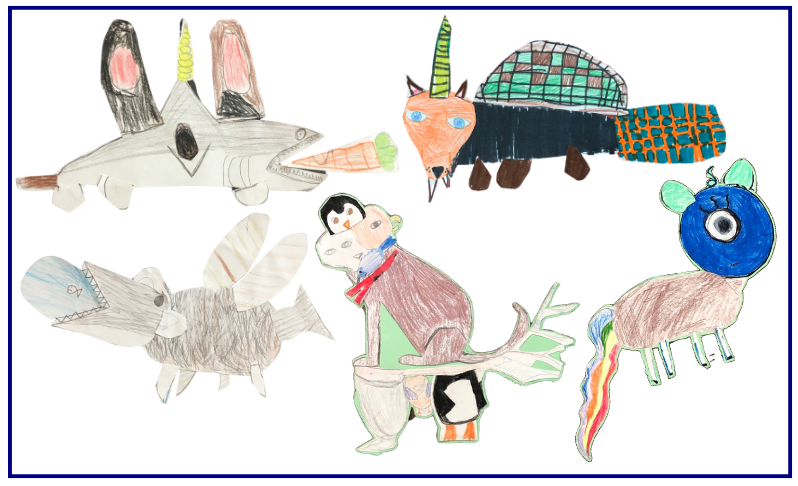
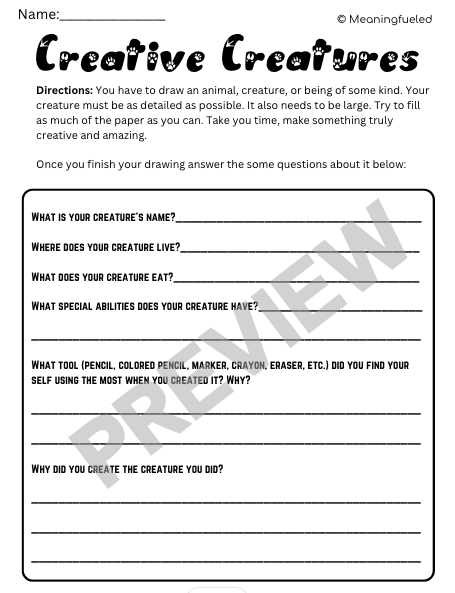
In part 1 of the this task you give students a sheet of paper and ask them to draw any creature they would like. Any paper will do, but if you have thicker paper that tends to work better. Ask them to take their time, fill the whole paper, and include as much detail as possible. When the students finish they complete a reflection about what they made.
Part 2:
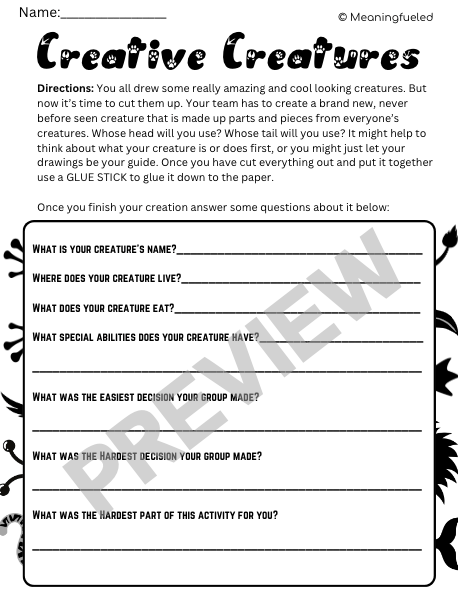
For part 2 of the this challenge you will start by putting your students in groups (typically the day after you completed part 1). Each student will bring their creature drawing with them and you can open with giving everyone 1 minute to share about their creature to the group (if you didn’t do a class share during part 1). Then you tell them that this is called the Creature Challenge because they now have to create a brand new creature by cutting up their drawings and combining parts to form a brand new creature. They will have to decide what parts of each person’s creature to use which will lead to lots of conversations and a need for compromises. Some students might have a big reaction to having to cut up their creature and for certain students, particularly those with identified social emotional difficulties, we have made color copies of their originals to help them participate successfully. However we don’t recommend doing that for the whole class because the lesson here is sometimes we need to make decisions to help the group, and sometimes that is uncomfortable.
Give students a large piece of paper and tell them to glue their new creature together on it. Then they can complete a reflection about the activity. We would recommend cutting out the creatures and laminating them so that they can hang on the wall as a reminder compromise. At the end of the activity you can lead a debrief going over the reflection.
Cup Stacking Challenge
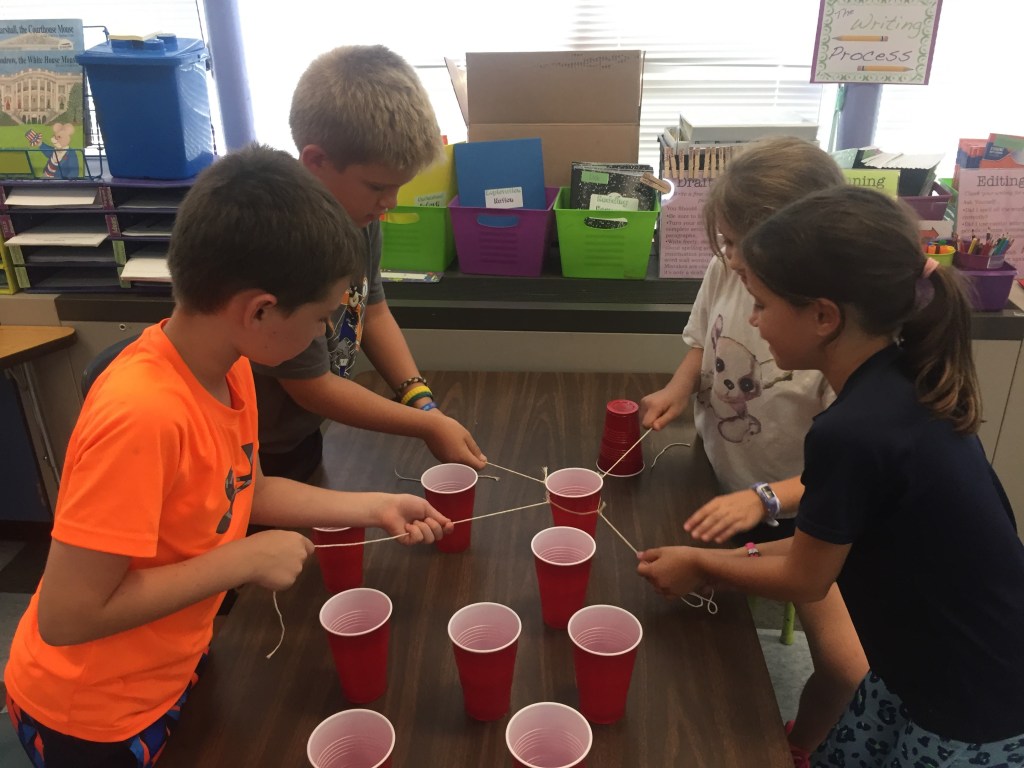
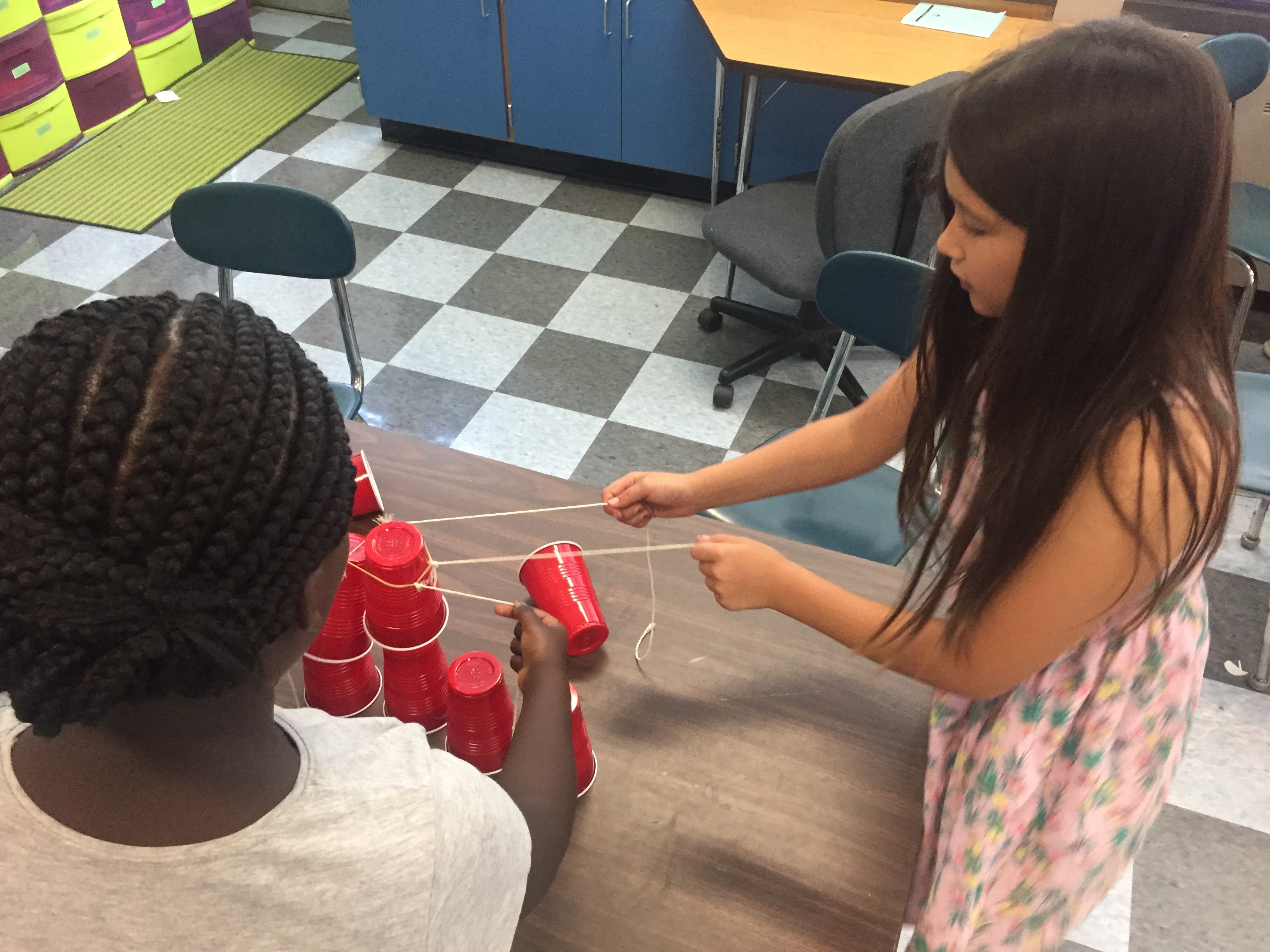
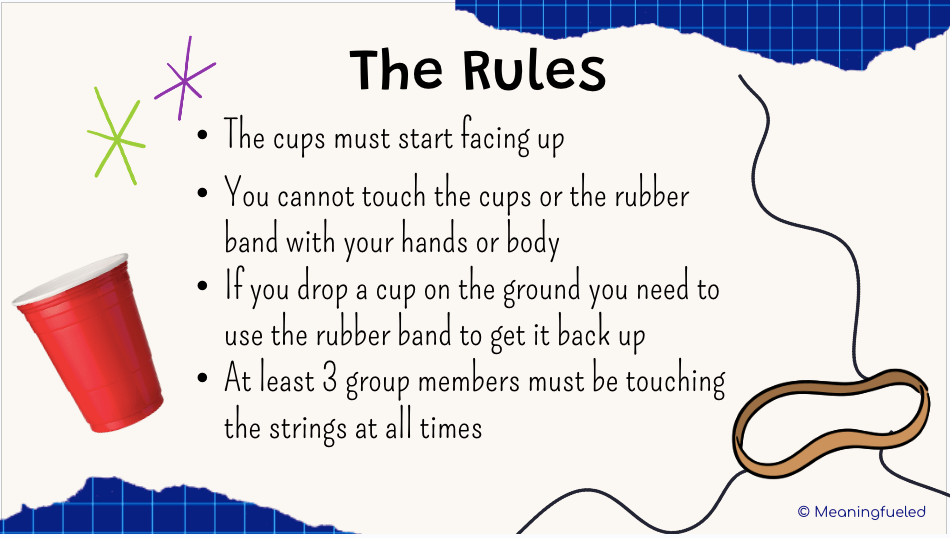
The cup stacking challenge is a great way for students to practice communication and problem solving skills. Start by preparing rubber bands with 4 pieces of string attached to each one. We recommend making at least 2 per group as they tend to break. You will also need about 100 plastic cups. The red “solo” style work best. Next split your class into teams of 3 or 4 and present the rules:
Then you can present the first challenge. We usually start with 6 cups for a simple 3,2,1 pyramid.
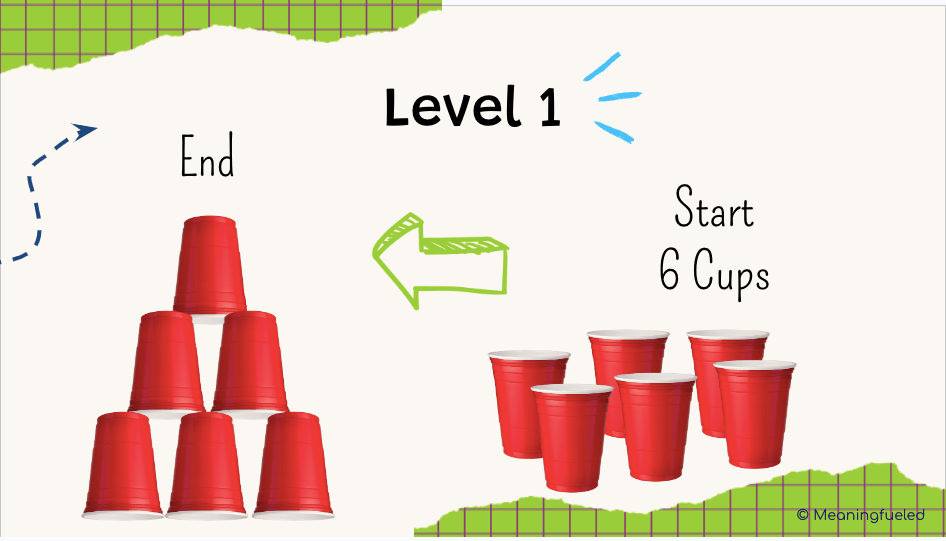
Then you can progress to a 10 cup pyramid, and other configurations. After the challenge you can hold a class reflection where you ask students to think about what was hard and what was easy in this challenge and what strategies they discovered. In the end you can tie the activity to the need for good, clear, communication in the classroom and the importance of perseverance.
Saving Sammy Challenge
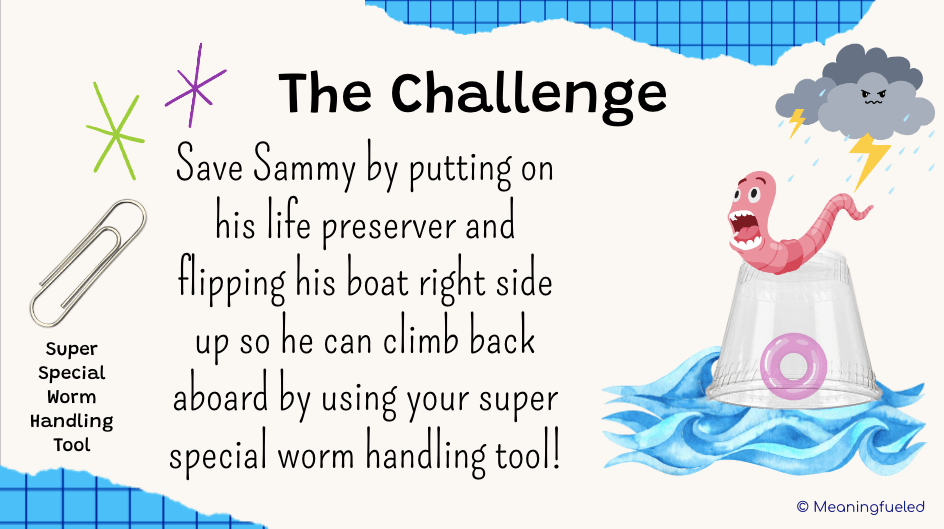
For this challenge you will need a package of gummy worms, a package of life saver gummies, some large paper clips, and some short plastic cups. Again you will start by putting students in teams of 3 or 4. Then you can tell them the story of Sammy, a worm who went out in his brand new boat on a beautiful sunny day, before the weather suddenly turned bad. The wind picked up and capsized his boat. Luckily he climbed back on top but now he needs to put his life preserver on and to get his boat right side up so he can head home. He needs your students help because worms can’t swim! Each group will get 2 paper clips (special worm handling tools) that they can use to complete this mission. Without Sammy falling the “water” (their desks or table) they must get the life preserver out from under the boat, on him, and then get him back inside the boat.
Communication and perseverance will be necessary as this challenge can be tough. Students will need to keep working the gummies so they get softer, but not too soft that they break. If they do break you can give groups new gummies. After the activity you can lead a whole class reflection about what went well, what didn’t, and what lessons they learned.

The Puzzle Challenge
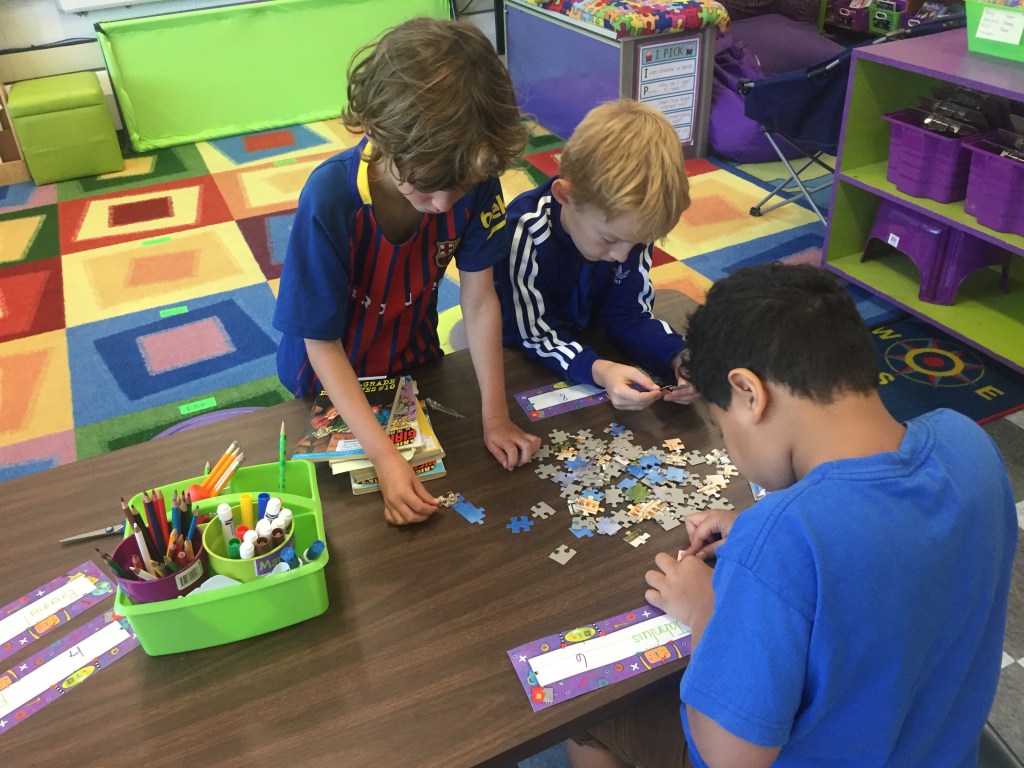
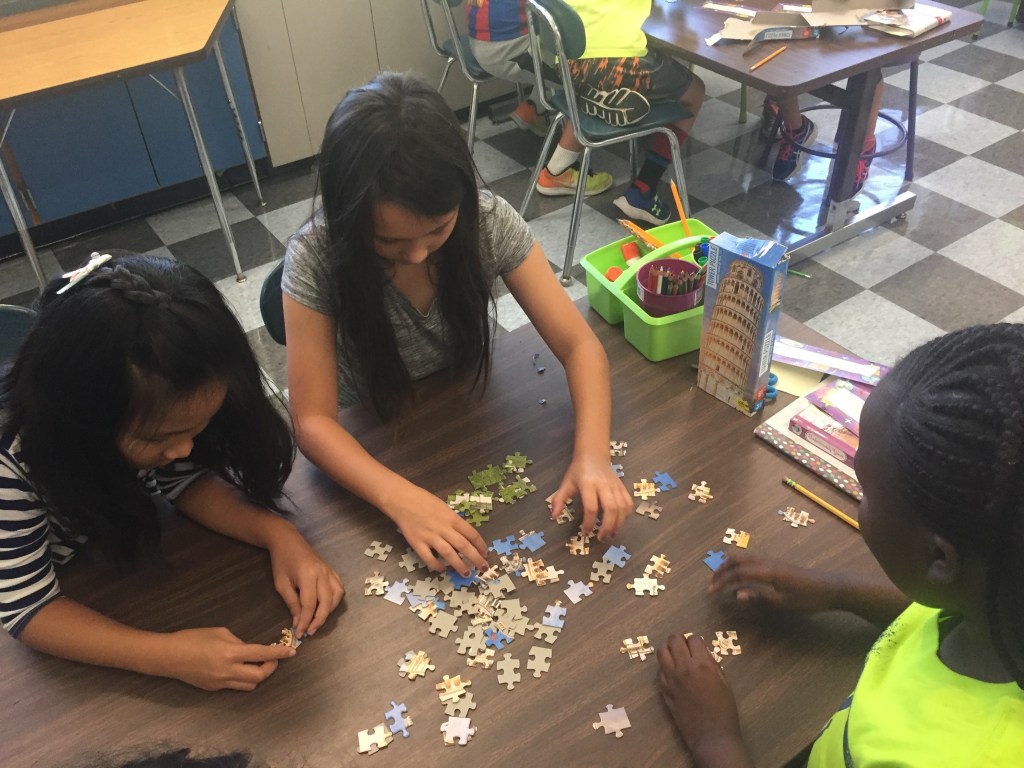
This challenge is simple and yet has so many important lessons embedded in it. All you need is 1 puzzle for every group of 3 to 4 students in your classroom. For grades 3 and up we have always used 100 piece puzzles, and for younger grades have used 50 or 24 pieces. Dollar Tree is our go to spot to pick up the puzzles. To begin you simply tell the students that their goal is to put together the puzzle. Then you hand the puzzles out, count down and say go! Sometimes even opening the box is a challenge as students dive in. It is interesting to see which team create a strategy and delegate tasks and which ones just work on their own. Without you saying it students will interpret this challenge as a race and inevitably one group will finish first. They often let out a cheer much to the chagrin of the other teams. This always leads to interesting conversations during the reflection. Who said it was a race? Is accomplishing the goal in your own time any less impressive? Is it okay to celebrate you accomplishments in our classroom? Did the team who finished first celebrate appropriately?
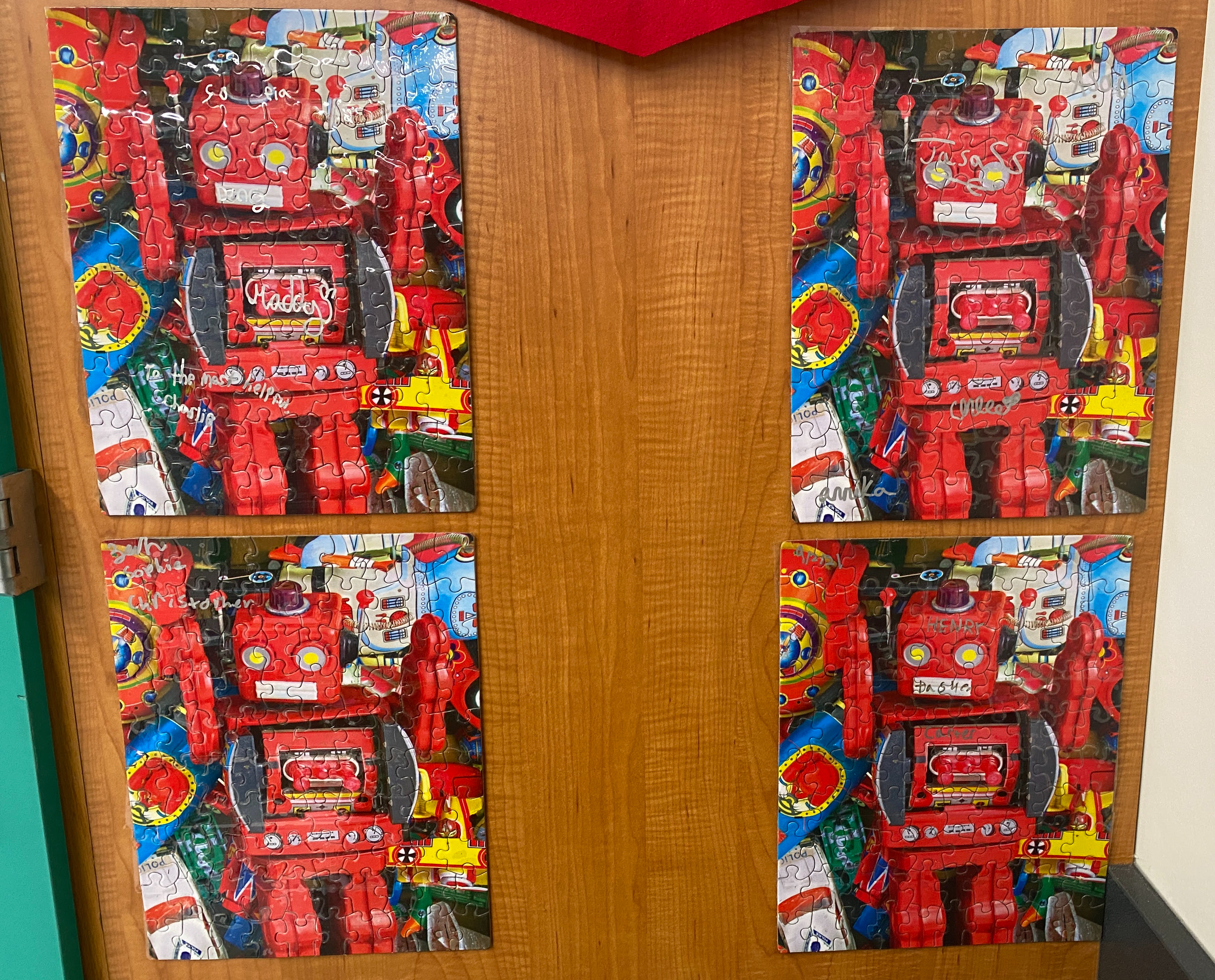
When the students complete their puzzles we often use packing tape to tape them together and then have students sign them using Sharpies. Then throughout the year when you need to remind your students about teamwork, or people working at their own paces, you can point to the puzzles!
Radioactive Transport Challenge
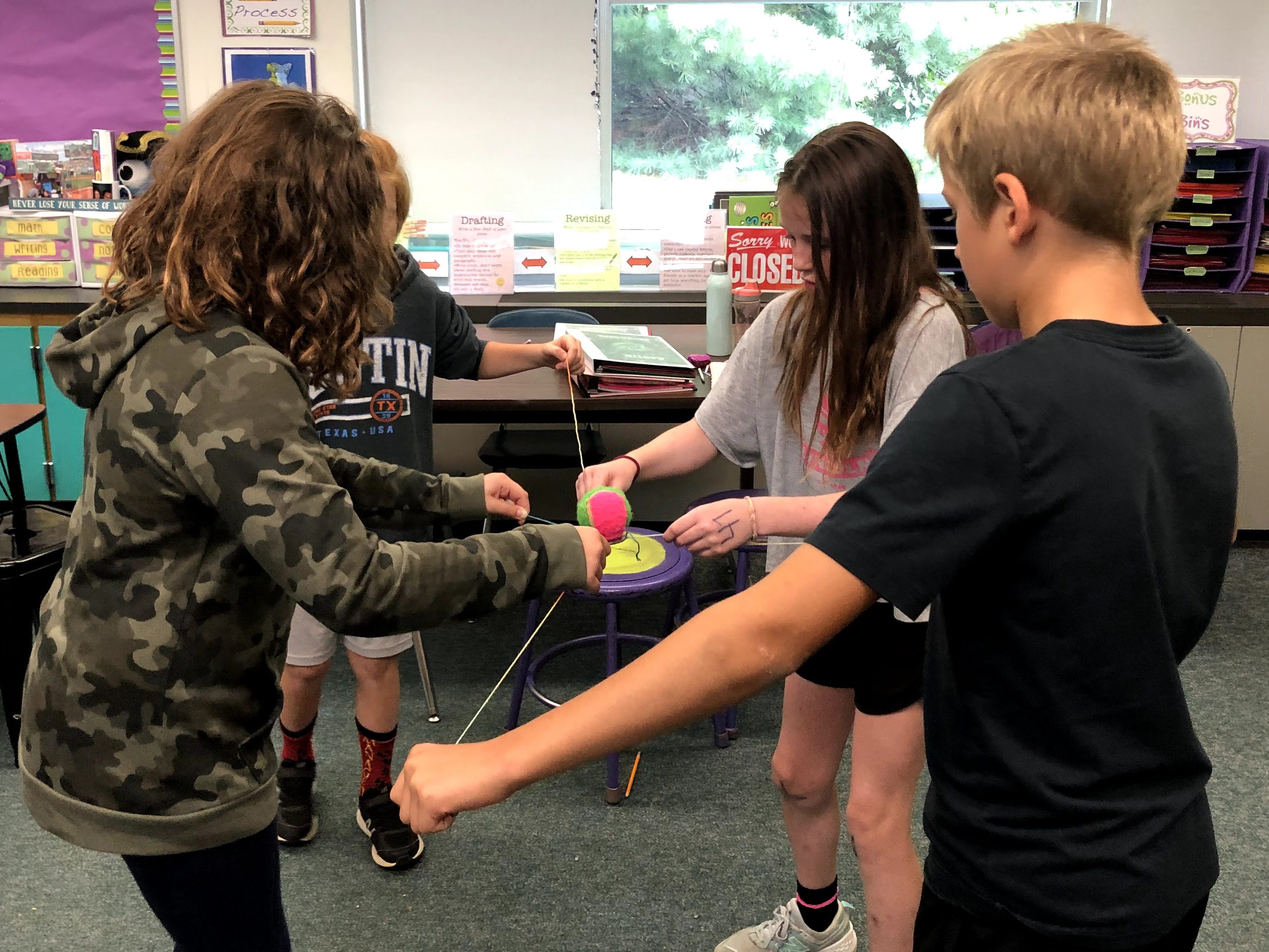
In this challenge students try to transport “radioactive” balls across the classroom, gym, or an outdoor space and deposit them in containment containers. To do this they obviously can’t touch the balls with their hands but instead need to use a special tool: a washer with strings attached. To make the tool you’ll need some 1in (or bigger) washers with 36in strings attached to them with some simple knots. You will also need buckets or bins (book baskets work fine), as well as tennis balls. You might also want to use plastic golf balls or dodgeballs so that you have other options for students to try. Finally, we like to have use some red “solo” style cups for as an additional challenge where students have to deposit the balls on top of the cup.
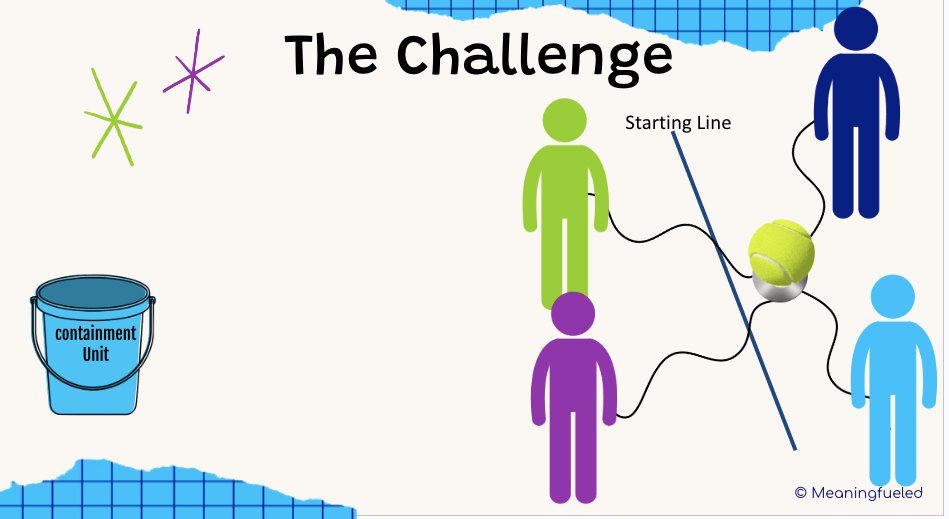
This challenge is challenging, and students will need to manage their frustrations as even the best communication and strategy can still lead to lots of dropped balls. If the students drop the balls they need to go back to starting line and try again. Students might figure out that the closer they hold the strings to the washer the more stable it becomes. If they are successful this way you can “up” the challenge to requiring them to hold the strings at the end. We have also had students try to wrap strings around the ball or hold the ball in a sling of all 4 strings. These methods, while creative, take away the teamwork aspect of the challenge so we disallow them. Like the other activities we recommend holding a class reflection afterward asking students what went well, what was challenging, and what feelings this brought up for them.
Bringing It All Together
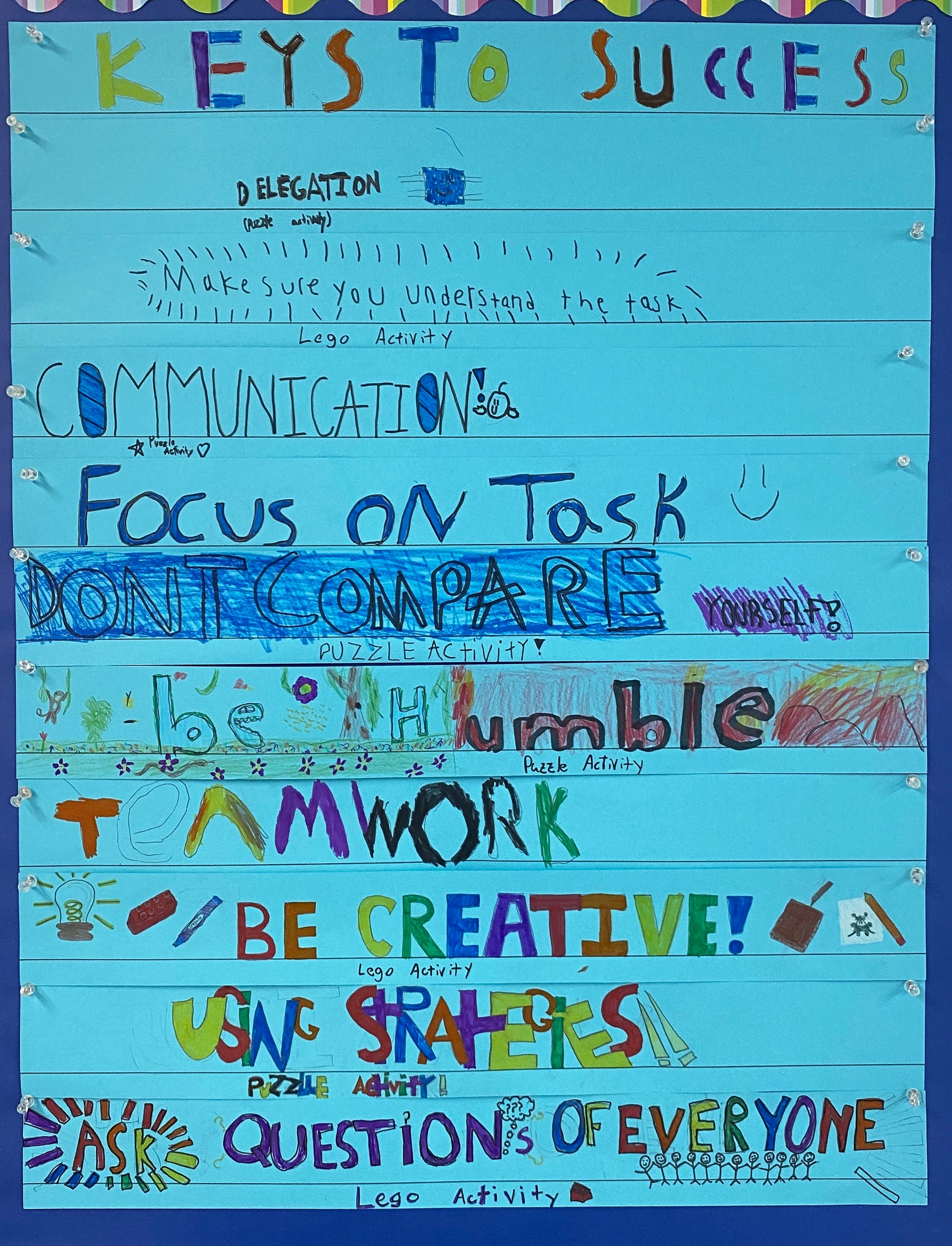
After the reflection of each activity we have a student create a sentence strip with the lesson or lessons we learned from the activity. These become our “Keys to Success” for the school year. On each sentence strip students reference which activity taught us that lesson like “Be Humble” from the puzzle activity or “Don’t Compare Yourself” from the Saving Sammy activity. Then we refer to the keys time and time again throughout the school year often asking students before we start an activity to think about what Keys to Success will be important to keep in mind.
Want all the activities?
 Meaningfueled
Leave a comment