
“Am I a bad teacher if my room doesn’t look like a themed Really Good Stuff ad?”
You’ve been there. You’re mid-scroll on Instagram, bombarded with dreamy classroom setups — neon lights, custom murals, perfectly labeled everything, sensory corners curated to Martha Stewart-level detail. Your classroom? It’s clean… functional… maybe a little chaotic. And suddenly you’re wondering: Does classroom aesthetic say something about who I am as a teacher?
That’s the exact POP — Problem of Practice — that we tackled in the first episode of POP by MeaningFuelEd. We’re Sarah, Erin, Brianna, and Joe — four longtime educators who’ve been through every iteration of classroom decorating you can imagine. In this episode, we had an honest, laugh-filled, and research-informed conversation about the pressures of Pinterest-perfect rooms, what the science says about classroom environment, and how to find the balance between design and purpose.
📚 So… does classroom décor matter?
Well, yes — and no. There is research that suggests your environment can impact learning — but it’s not about how “cute” your room is.
Let’s break it down:
✅ What the research actually says:
🧠 1. Too Much Decor Can Be Distracting
- Study: Visual Environment, Attention Allocation, and Learning in Young Children
- Researchers: Anna V. Fisher, Karrie E. Godwin, and Howard Seltman (Carnegie Mellon University, 2014)
- In this study, kindergarten students were taught lessons in two types of classrooms: one with bright, busy decorations all over the walls, and another with more minimal, simple decor. The same teacher taught the same lessons in both settings.
- What happened?
- The students in the heavily decorated room were more distracted and spent more time looking around than paying attention. They also scored lower on post-lesson tests.
- What this means for you:
- It’s easy to think “more visuals = more learning,” but this research shows that too much decor can actually interfere with student focus — especially for young learners. Keep high-traffic learning areas, like your teaching wall or meeting space, clean and clear. Add visuals slowly and intentionally.
- 👉 Read the study here
🌿 2. Classroom Design Impacts Academic Progress
- Study: Clever Classrooms
- Researchers: Professor Peter Barrett and team (University of Salford, UK, 2015)
- This was one of the largest studies on classroom design ever done. Researchers visited 153 real primary classrooms and followed over 3,700 students for a full year. They looked at everything from lighting and color to furniture and wall space, and then tracked student growth in reading, writing, and math.
- What did they find?
- Classroom design had a measurable impact on learning — accounting for as much as 16% of the variation in student progress. The biggest positive effects came from:
- Natural light and good air quality
- Comfortable temperature
- Clear organization
- Spaces where students had a sense of ownership
- Classroom design had a measurable impact on learning — accounting for as much as 16% of the variation in student progress. The biggest positive effects came from:
- What this means for you:
- Your classroom doesn’t have to be fancy. Instead, focus on things like:
- Opening blinds and using lamps to brighten dim spaces
- Decluttering to make the room feel calm
- Letting students help design bulletin boards or choose work to display
- These kinds of choices have been shown to support learning in real classrooms.
- Your classroom doesn’t have to be fancy. Instead, focus on things like:
- 👉 Read the study here
🔑 3. Students Learn Better When They Feel Ownership
- Study: Clever Classrooms (Barrett et al., 2015)
- Also Supported By: Joyce Epstein’s framework on School, Family, and Community Partnerships (2001)
- The Clever Classrooms study found that when students had a say in their environment — whether by contributing to bulletin boards, interacting with displays, or helping co-create classroom visuals — they were more engaged and learned more.
- This finding connects with the work of Joyce Epstein, whose book School, Family, and Community Partnerships emphasizes the importance of giving students a sense of belonging, responsibility, and shared ownership in their learning spaces. When classrooms reflect students’ voices and work, it builds motivation and creates a stronger sense of connection — not just to the room, but to the learning happening inside it.
- What this means for you:
- Leave space on your walls or bulletin boards for student-created materials — anchor charts, classroom rules, goal-setting displays, writing samples, or even rotating art. Let them help choose what goes up. This kind of co-creation not only builds community, it’s tied to both academic and social-emotional growth.
👉 Read more about Epstein’s work here
🧩 4. Not All Wall Space Is Equal — Be Strategic
- Book: Teaching with the Brain in Mind by Eric Jensen (2005)
- While previous studies warned against too much classroom decoration, both Jensen and Godwin et al. offer insight into what should go on your walls to support student learning.
- In his book, Eric Jensen argues that our brains are wired to seek relevance and connection. Students benefit most from visuals that are meaningful, updated regularly, and connected to current learning. Posters that stay up all year but aren’t referred to become visual “noise” — something the brain learns to ignore.
- Meanwhile, while Godwin et al. (2014), showed that highly decorated classrooms can impair young children’s attention, they emphasized that not all visuals are bad — it’s about timing, placement, and relevance. Students did better when wall materials were aligned with the current lesson and not simply used as decoration.
- What this means for you:
- Instead of filling every inch of wall space, be thoughtful.
- Use:
- Anchor charts created together during lessons
- Word walls or math visuals tied to current units
- Student work that celebrates learning in progress
- Displays that you refer to regularly and update often
- This approach helps students’ brains focus on what matters and reduces overstimulation.
- 👉 Find Teaching with the Brain in Mind here
💬 Real Talk from Real Teachers
Each of us came has a slightly different approach to setting up our classrooms.
- Joe proudly sports a lime green and purple color scheme. He built bookshelves by hand, invested in quality materials (yes, book bins are absurdly expensive), and focuses on lasting design rather than trends.
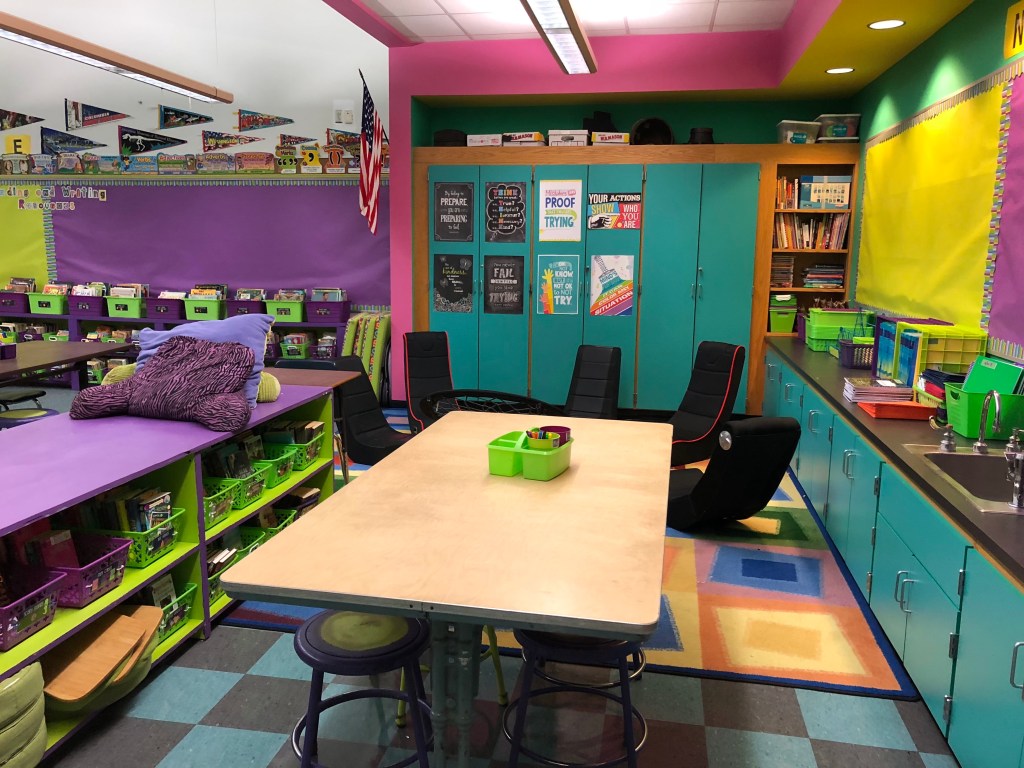
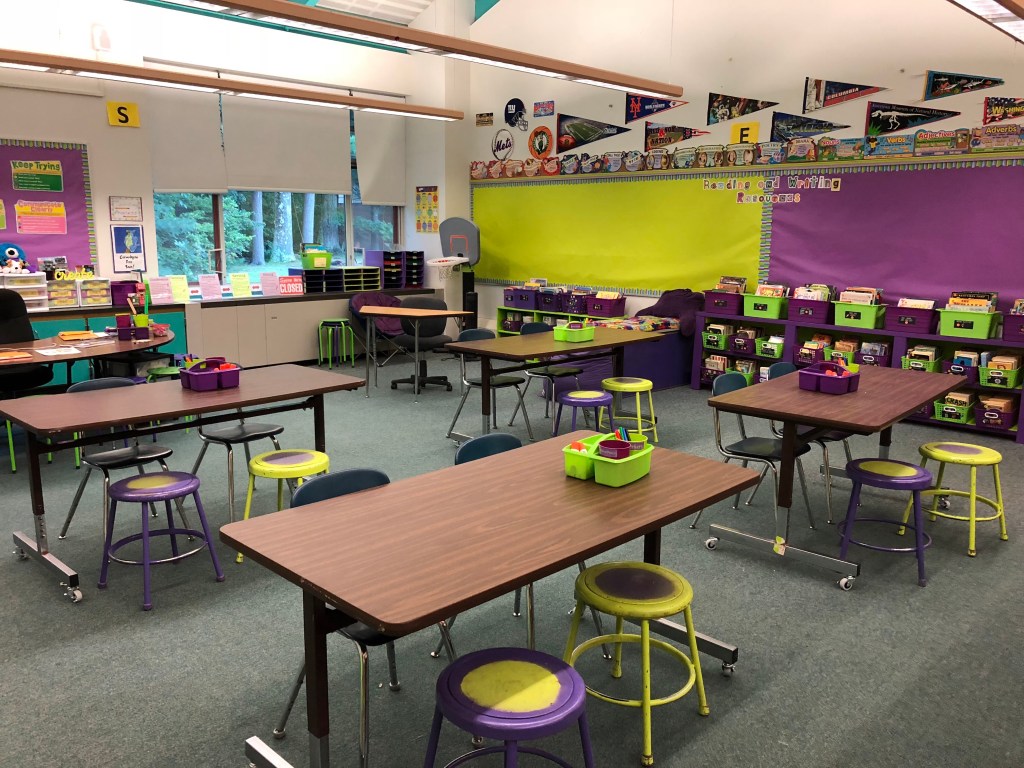
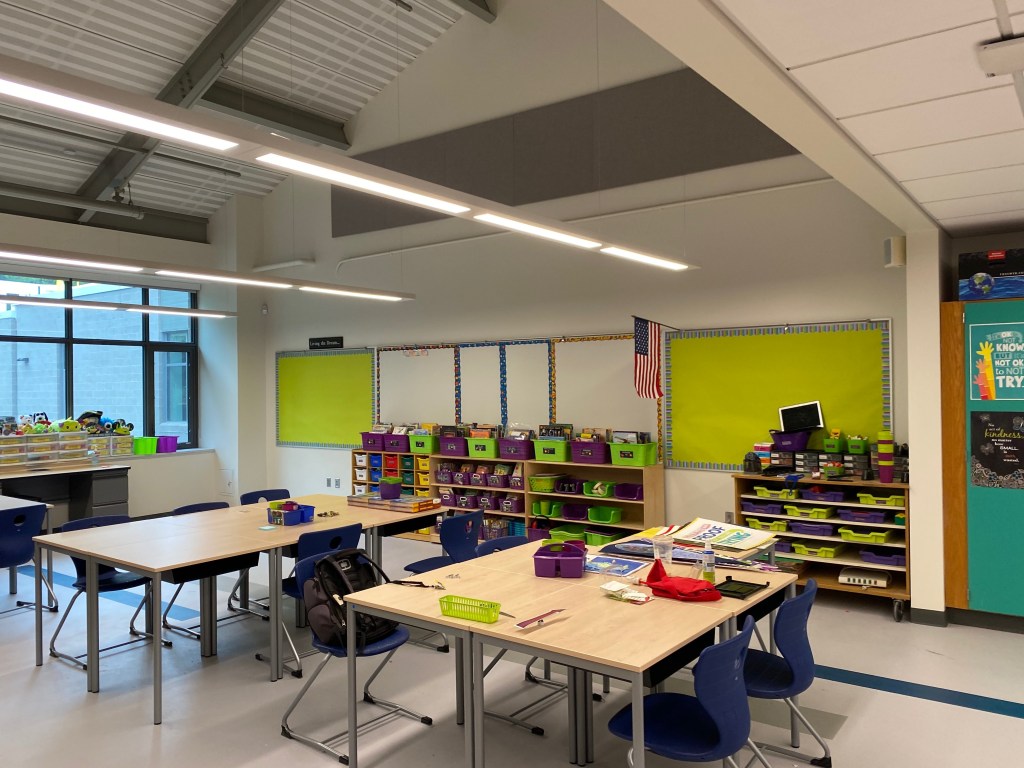
- Erin is a self-proclaimed Type B — decorating slowly over time, but still wants things to match, and if there is something that doesn’t, that is what spray painting on the roof is for (shhh). She also has to do lots of creative problem-solving because her classroom was on a military base where helpers were forbidden, and bulletin boards were missing. That was nothing some Better Than Paper and a chair tightrope walk couldn’t fix.
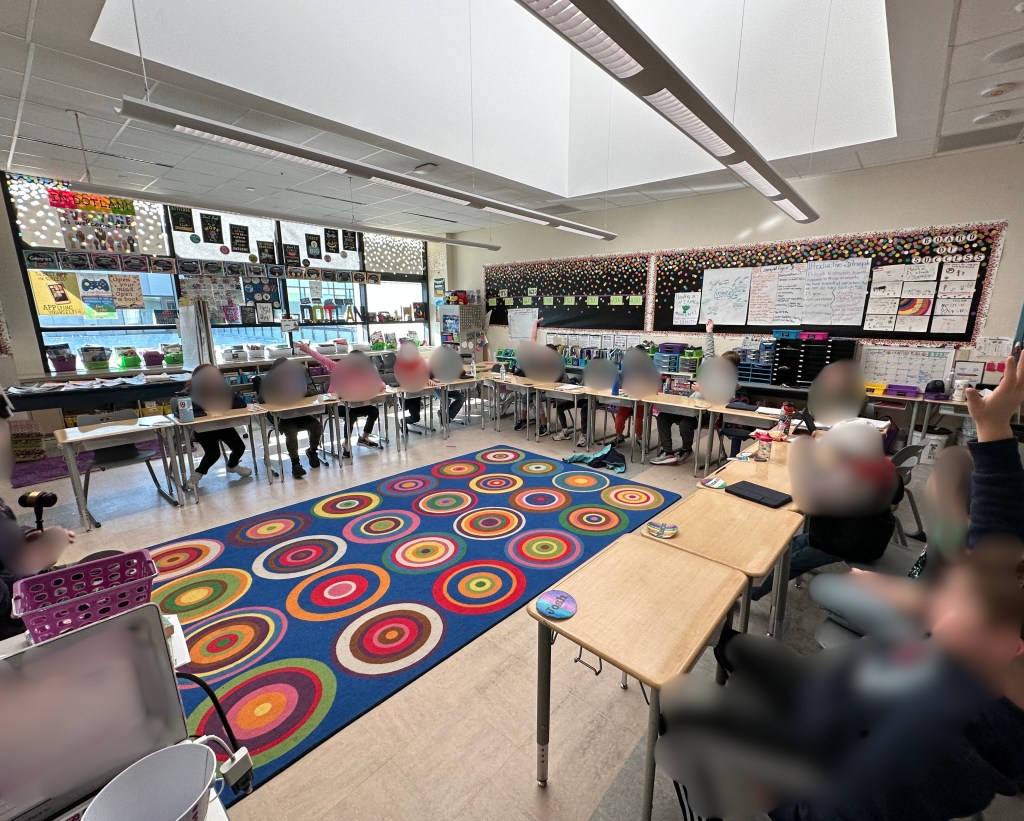
- Brianna loves creating a calm, coordinated environment with lamps, color schemes, and minimal distractions. She’s heard it all — from admiration to judgment — but she keeps her focus on what brings her joy and helps students feel at ease. She recently switched out her bulletin boards for some more neutral white woods and blacks that go with everything.

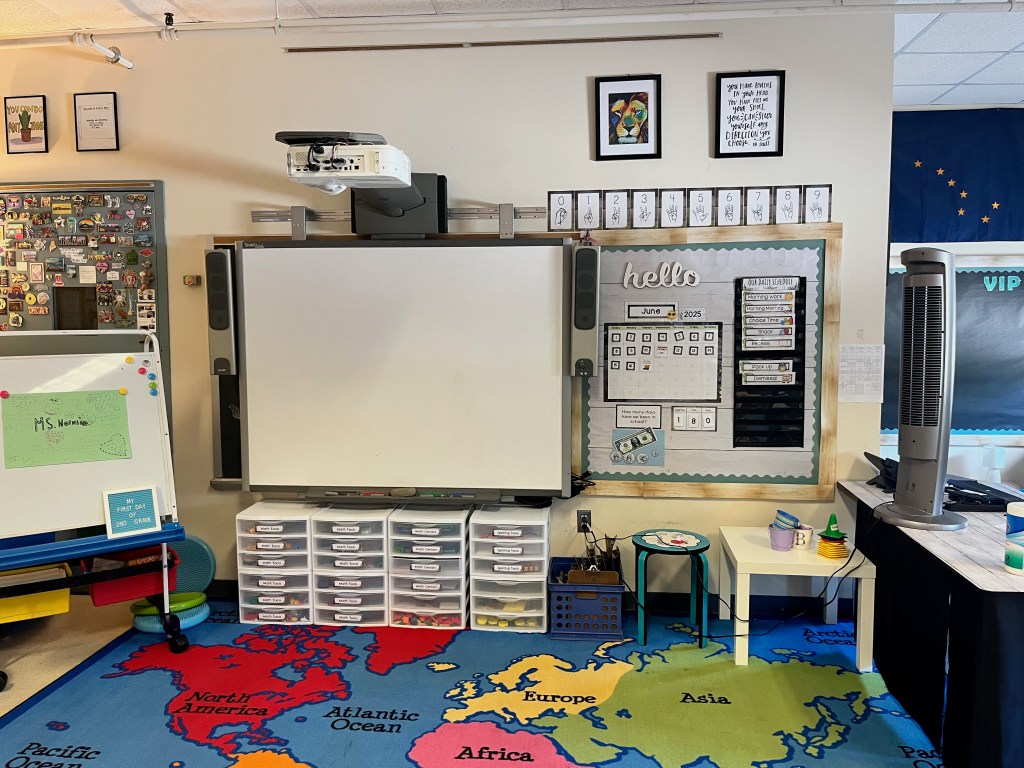
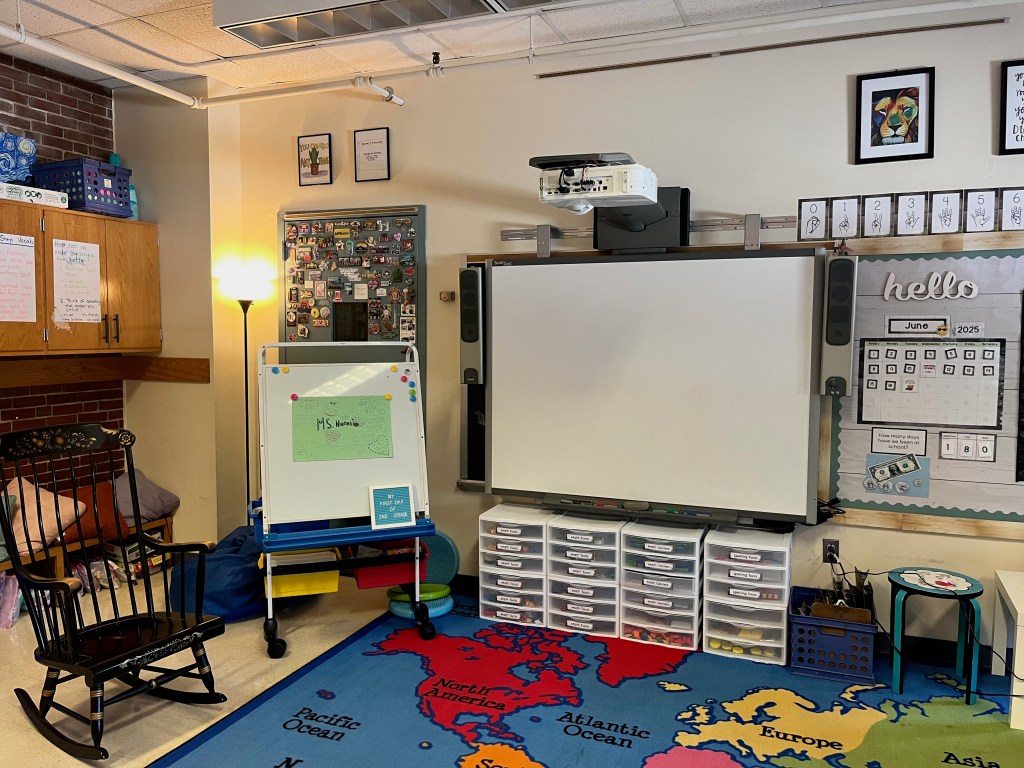
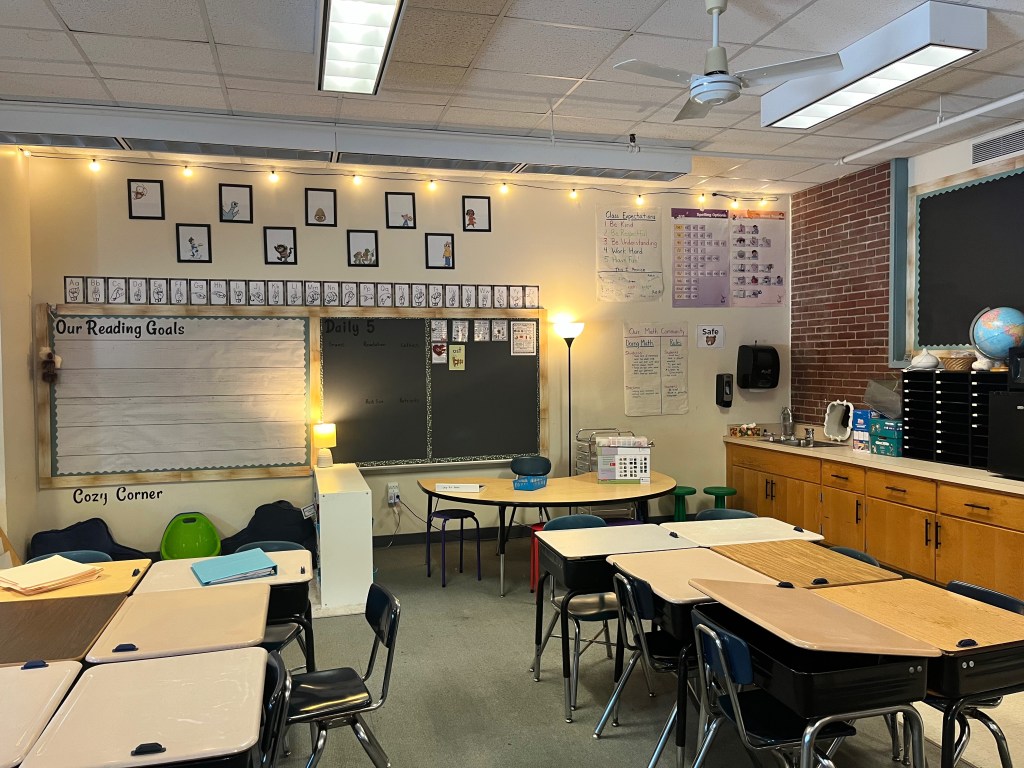
- Sarah is the kind of teacher who genuinely loves the process of decorating. From relabeling book bins to making sure bulletin board corners are perfectly cut, she pours her creativity into the space. But she’s also wrestled with the question: Does all this effort really matter if it doesn’t impact learning? Her story reminds us how easy it is to tie our self-worth as teachers to how our classroom looks — and how important it is to challenge that narrative.
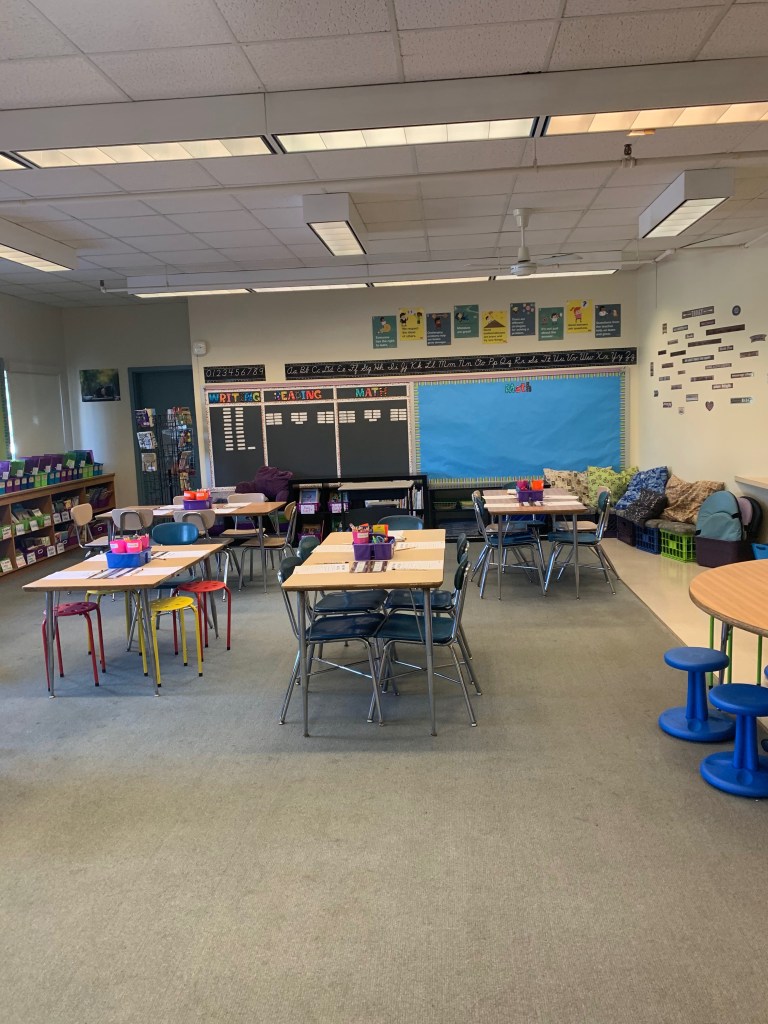
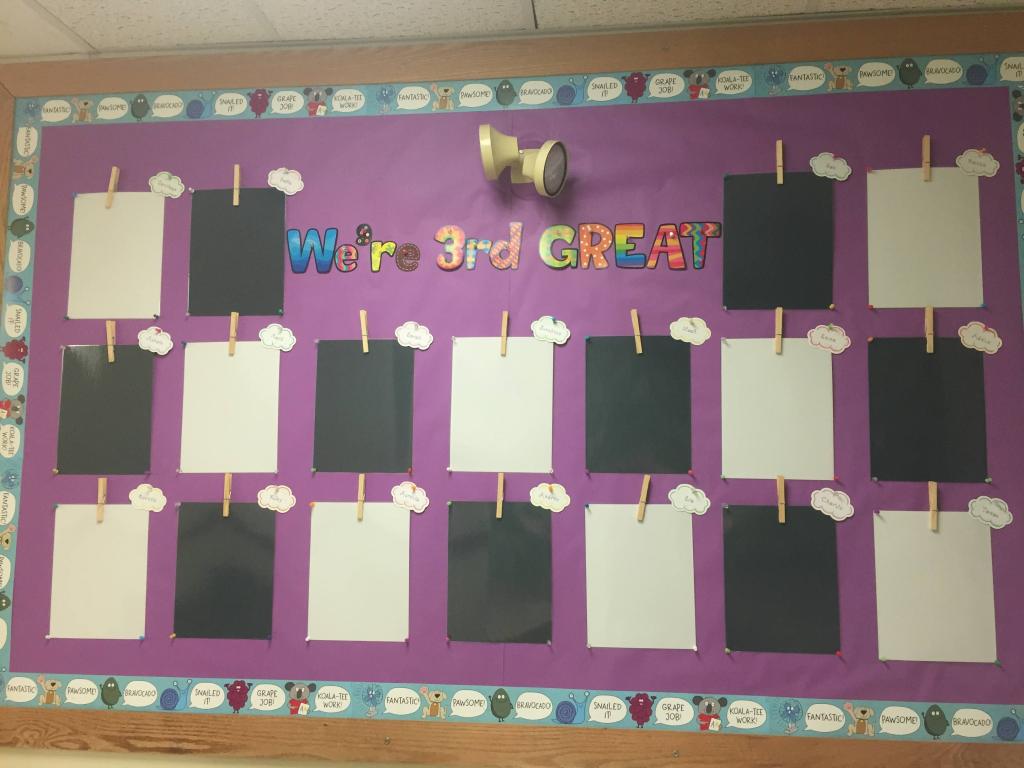

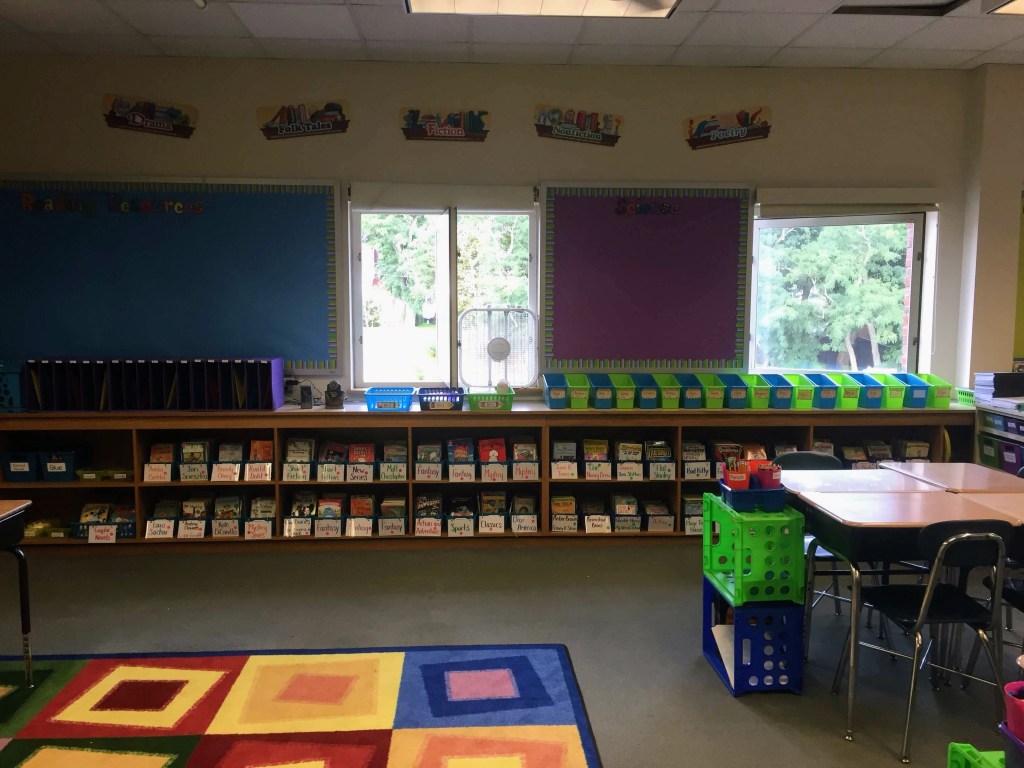
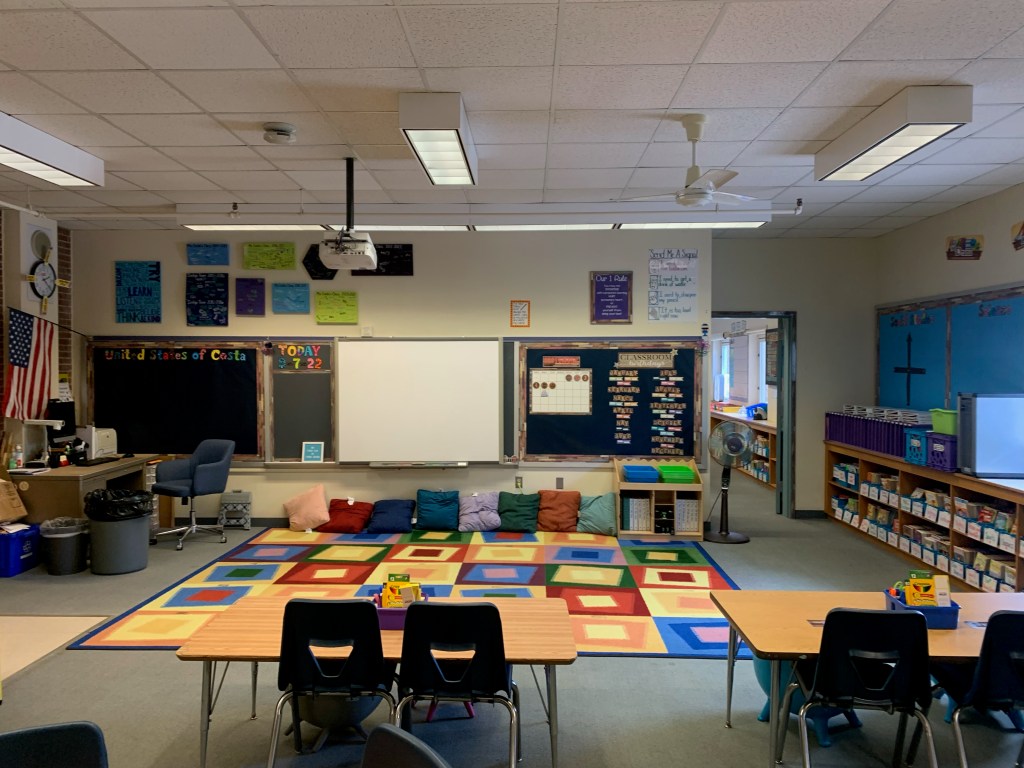
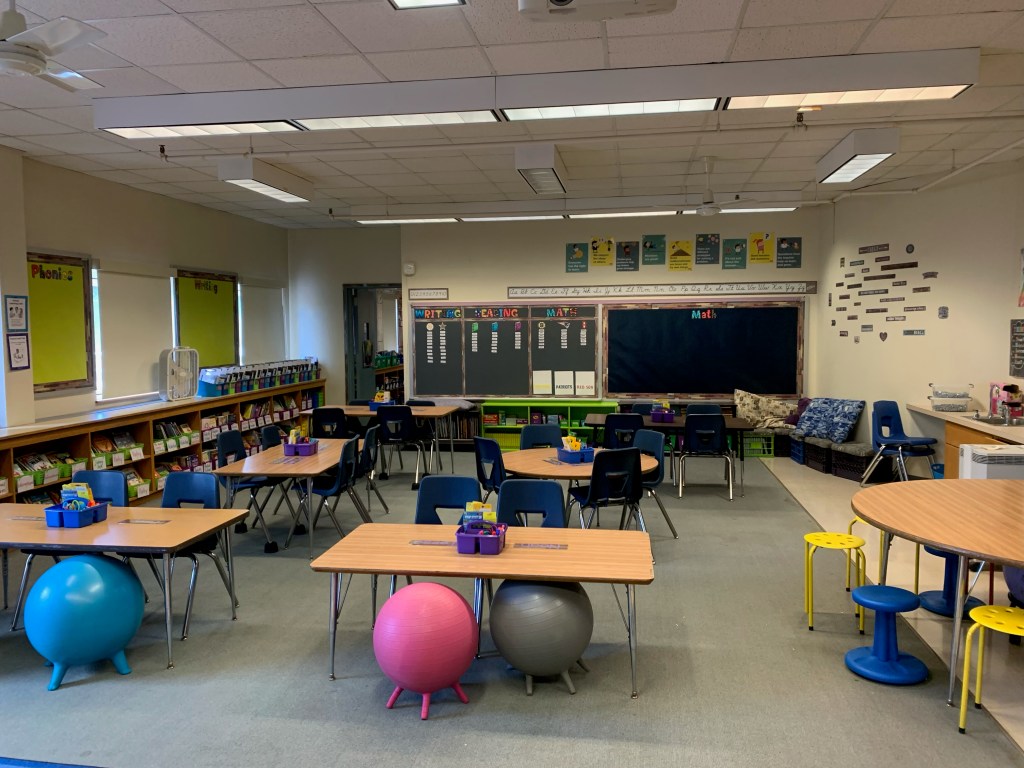
We all agreed on one big thing: A beautiful classroom does not equal a good teacher, and as you can see above even though we all put lots of thought, effort, and money into our classrooms they still don’t look like they belong in a magazine.
🛠️ So what should you do?
Here are our MeaningFuelEd Tips for Navigating the Classroom Decor Dilemma:
🎨 1. Pick a color scheme — and stick with it.
Two dominant colors + two accents is an easy way to create visual calm without spending hours (or your whole paycheck).
🧘 2. Decorate for function, not just feel.
Ask yourself: Does this help students learn? A disco ball might be cute, but color-coded supplies or a labeled schedule board help kids build real executive functioning skills.
🌀 3. Don’t do it all at once.
Your classroom can evolve over time. Add a new bulletin board in October. Change your reading corner in February. You’re allowed to pace yourself.
🪑 4. Make students part of the decor.
Leave space blank at the start of the year to fill with class-created charts, posters, or goals. Students take more ownership in a room they help create.
🔥 5. Know your building’s rules.
Some schools have fire codes or wall space restrictions. Check before going wild with fabric and lights or painting a whole wall!
🚆 6. Stay off the comparison train.
Social media doesn’t show the full picture. That perfect classroom you saw online? It might be sponsored, staged, or supported by grants you don’t know about.
♻️ 7. Reuse and repurpose.
Fadeless paper, reusable bins, black backgrounds with interchangeable borders — make choices that last. And keep an eye out for free giveaways from teachers leaving the profession or changing grades.
🎤 Closing Thoughts
At the end of the day, how you decorate your classroom should reflect your goals, your time, your budget, and your students — not someone else’s Instagram gird.
Whether your room is full of fairy lights and flair pens or anchored by duct tape and dollar-store bins, you’re enough. Your students need you more than they need a theme.
 Meaningfueled
Leave a comment